Theoretical physicist

Shaun D. B. Fell

Lead Scientist at Applied Physics

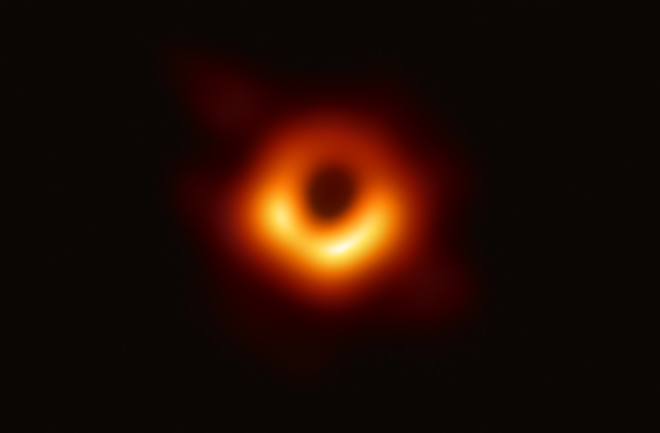
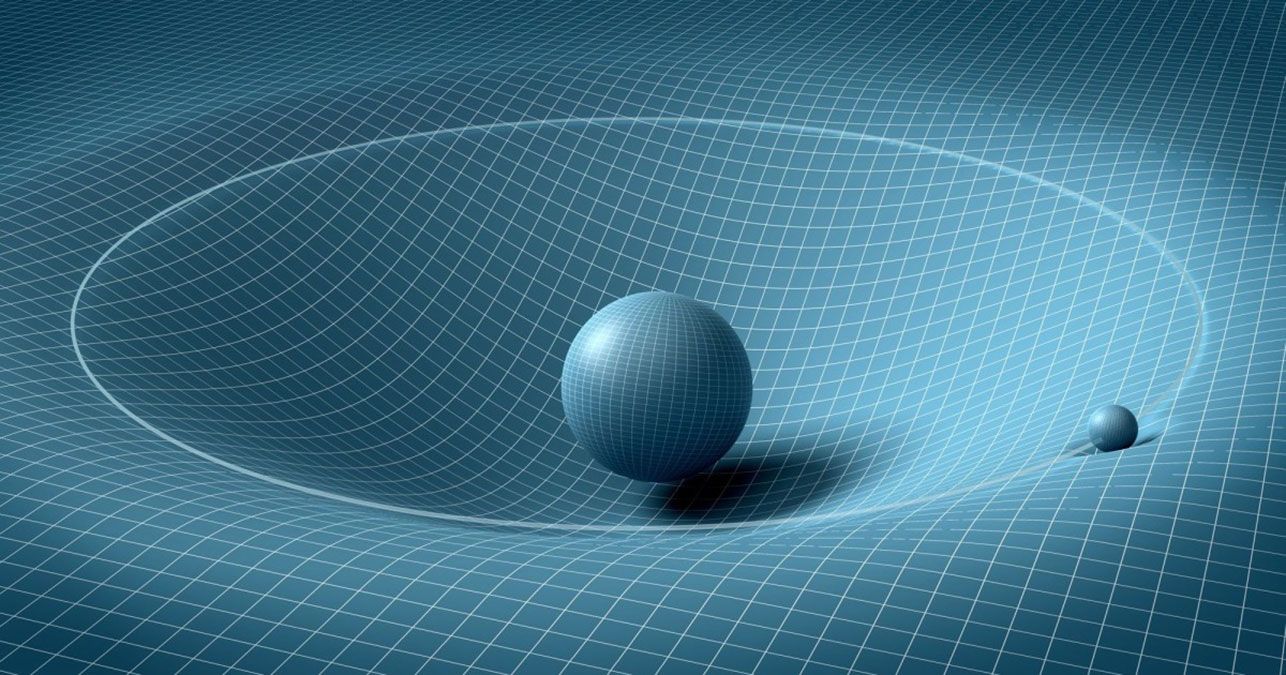
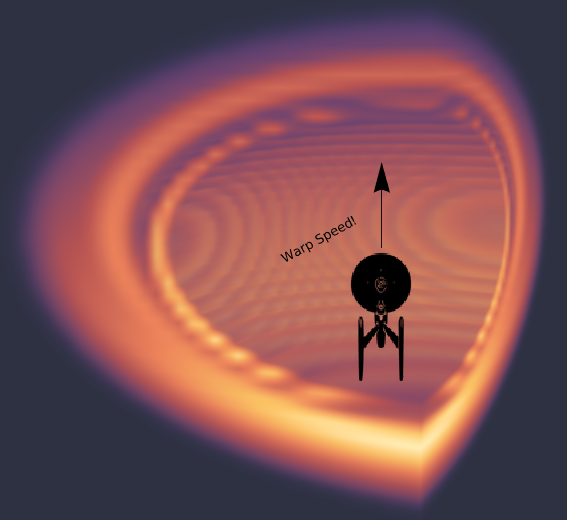
I study gravity at its extremes: black holes, the fundamental fields that might surround them, and the geometry of spacetimes we would one day like to build ourselves.

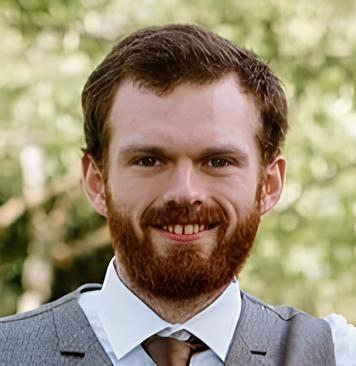
Portrait of Shaun Fell

About

I am a theoretical physicist working at the intersection of general relativity, particle physics and high-performance computing. My research asks what black holes can tell us about physics beyond the Standard Model, and whether spacetime itself can be engineered.

I completed my PhD at the Institute for Theoretical Physics in Heidelberg, where I studied superradiant instabilities of massive vector fields around rotating black holes and their gravitational-wave signatures for LISA. Along the way I wrote GRBoondi, an open-source numerical relativity code for evolving generalized Proca fields on arbitrary backgrounds. Before Heidelberg I studied at ETH Zurich, where my master’s thesis uncovered a hidden geometric structure in warp drive spacetimes, and at the University of Washington.

Today I lead research on applications of gravity to geophysical sciences, projects on fully-homomorphic encryption, warp drive physics and related questions in spacetime engineering at Applied Physics, and much more.

Read my CV

News

Selected publications

Kept up to date automatically from INSPIRE-HEP. Thumbnails are the first page of each paper.

All 8 publications
Preprint

Radiative Signatures from Warp Drives Traveling Through the Earth's Atmosphere

S. D. B. Fell, A. Loeb

2026

If exotic warp-drive propulsion were ever operating near Earth, it should not be able to hide: we simulated how a small, aircraft-sized spacetime bubble would sweep up and energize the air around it. Above roughly a tenth of the speed of light the interaction releases more than a trillion watts, producing an unmistakable glow, while slow-moving bubbles stay dark.
Journal article 20 citations

Detecting fundamental vector fields with LISA

S. D. B. Fell, L. Heisenberg, D. Veske

Physical Review D 108, 083010 (2023)

Space-based gravitational-wave detectors could double as dark matter experiments. We model how a cloud of dark photons grown by a spinning supermassive black hole alters the orbit of a small companion, and show that LISA could use these signals to constrain the dark photon's mass.

Journal article 266 citations

Black holes in f(Q) gravity

F. D'Ambrosio, S. D. B. Fell, L. Heisenberg, S. Kuhn

Physical Review D 105, 024042 (2022)

General relativity can be rewritten in terms of non-metricity instead of curvature, and its non-linear extension f(Q) changes the physics. We derive the most general static, spherically symmetric geometries in f(Q) gravity and prove that it admits both GR-like and genuinely new black hole solutions, settling a debate in the literature.

Journal article 32 citations

Positive energy warp drive from hidden geometric structures

S. D. B. Fell, L. Heisenberg

Classical and Quantum Gravity 38, 155020 (2021)

Warp drives have long been thought to require enormous amounts of negative energy. By uncovering a hidden geometric structure in the energy of these spacetimes, we construct superluminal warp bubbles sourced entirely by positive energy, with total energy requirements four orders of magnitude below a solar mass.